Love Shack Fancy Digital Dressing Room
A rapid AI-driven shopping experience inspired by play, personalization, and in-store magic.
Overview
Designed and executed in a 3-day sprint, this concept reimagines online shopping as an interactive, AI-powered dressing room. Inspired by the playful styling dynamics of games like Dress To Impress, the experience shifts away from passive scrolling and toward active outfit creation.
The goal was to bring the magic of in-store discovery into a digital space that feels intuitive, expressive, and engaging.
The Opportunity
Online shopping today is largely static and fatiguing. Endless scrolling replaces the experience of discovery, styling, and experimentation that happens naturally in-store.
This project explores:
How might AI transform online shopping into a more dynamic, personalized, and playful experience?
Brand Values and Experience
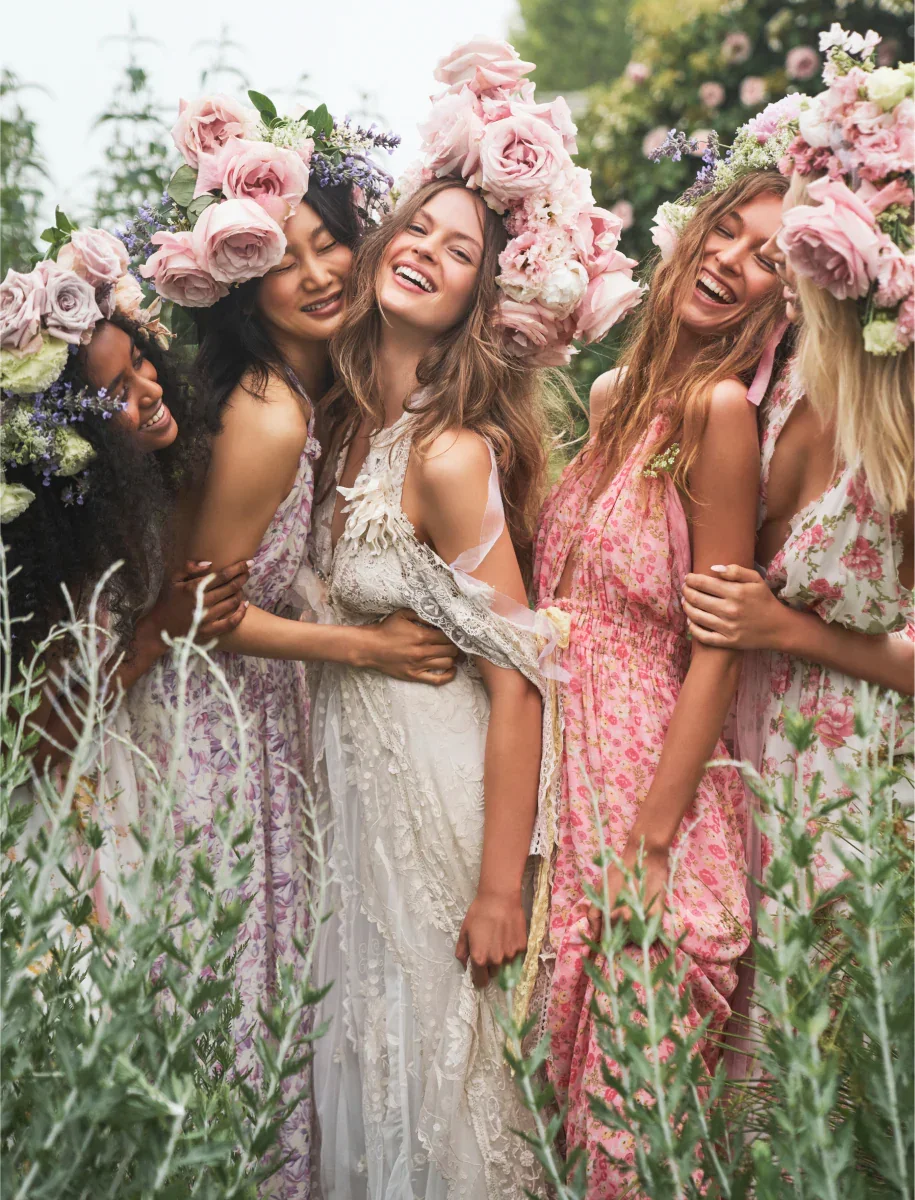
LoveShackFancy’s brand lives in a very specific emotional space rooted in nostalgia, femininity, and the playfulness of girlhood. It evokes memories of dressing up, experimenting with outfits, and finding joy in self-expression through clothing.
I wanted to translate that feeling into a digital experience.
At its core, this project explores the idea that “dressing up” shouldn’t be something we grow out of. The excitement of trying on outfits, mixing pieces, and imagining different versions of yourself is still there, but online shopping today doesn’t support that behavior. Instead, it flattens the experience into endless scrolling.
This is where the concept begins to shift.
By taking inspiration from online games like Dress To Impress, where styling becomes interactive, social, and playful, I reimagined shopping as something you actively participate in rather than passively consume. These games succeed because they tap into that same instinct from childhood, the desire to create, experiment, and express identity through clothing.
Process
I approached this project by grounding the experience in both brand and behavior.
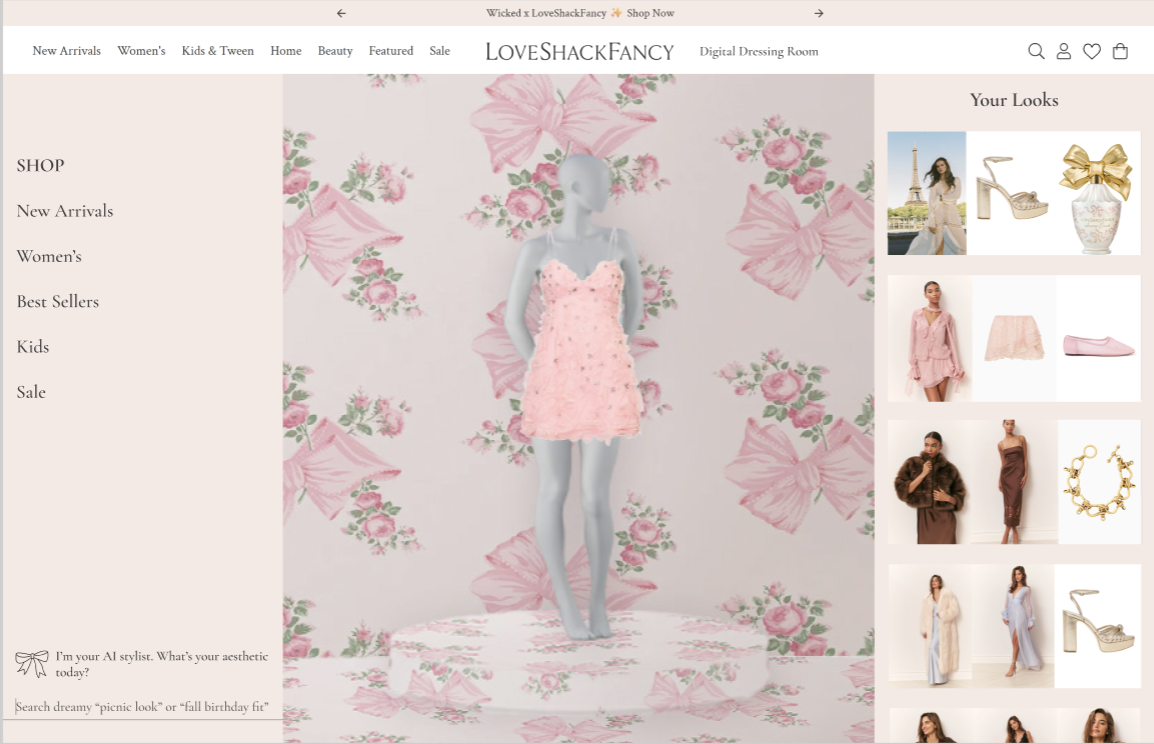
I started by wireframing with LoveShackFancy’s existing website and UI patterns in mind, while also pulling interaction inspiration from games like Dress To Impress. This led to an initial layout centered around two key zones:
a browsing panel for familiar shopping navigation
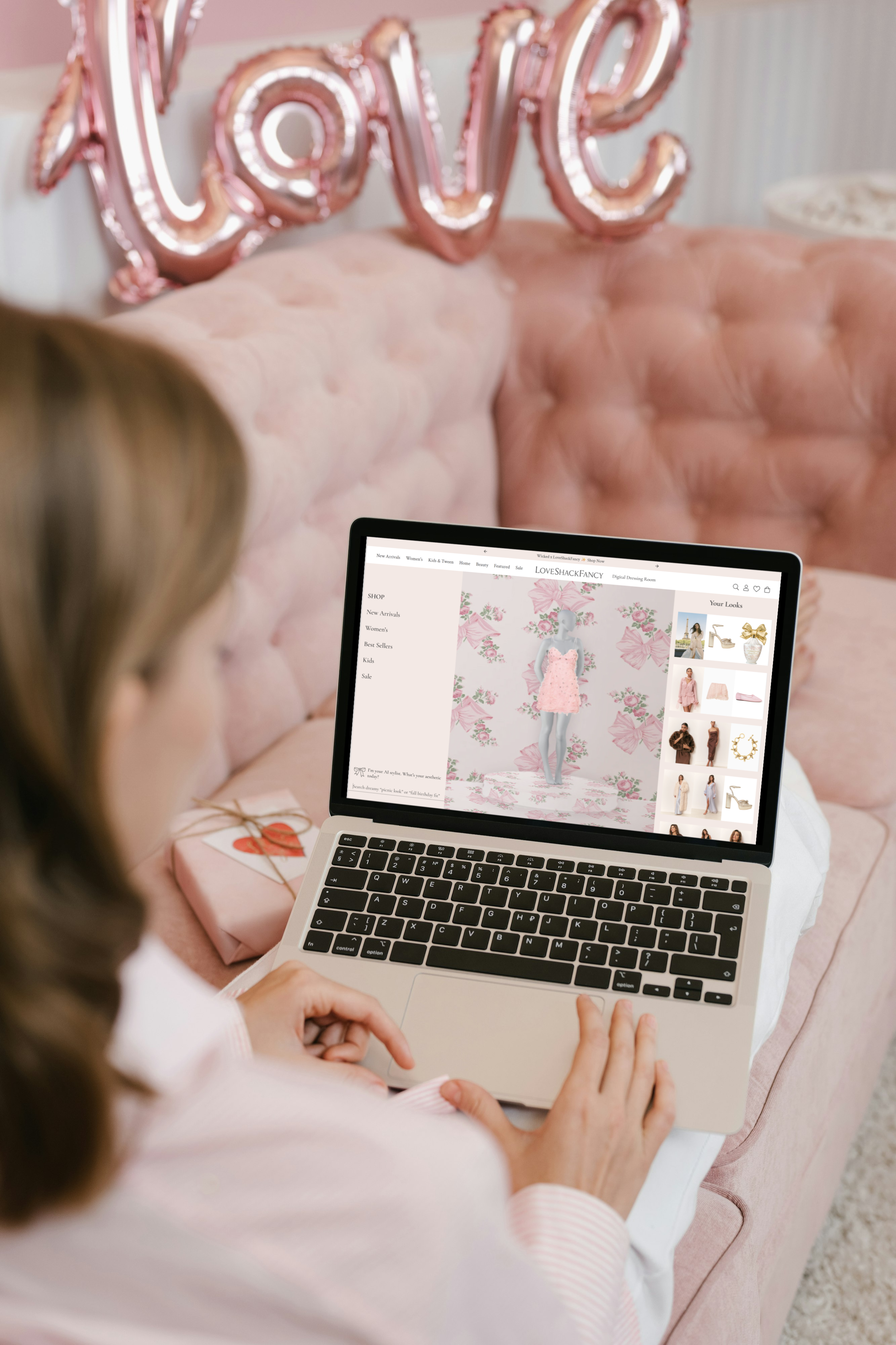
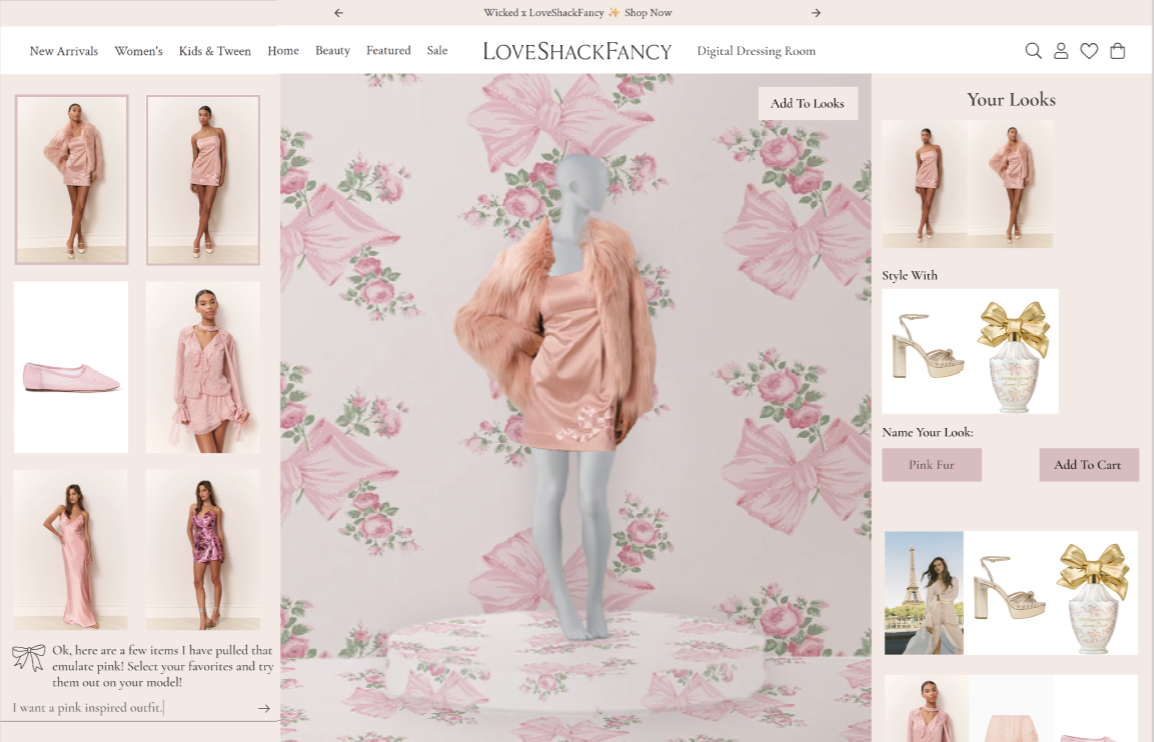
a central mannequin space for real-time outfit building
From there, I pushed the interaction further. I thought about how the experience could go beyond just trying on items to actually encouraging purchase and continued engagement over time, similar to how games maintain attention and repeat use.
Once the structure was defined, I moved into visual development.
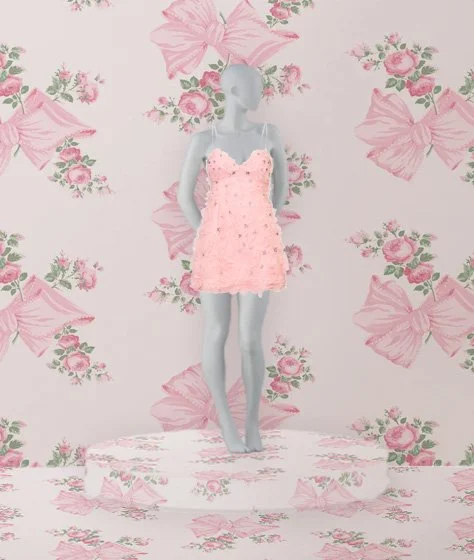
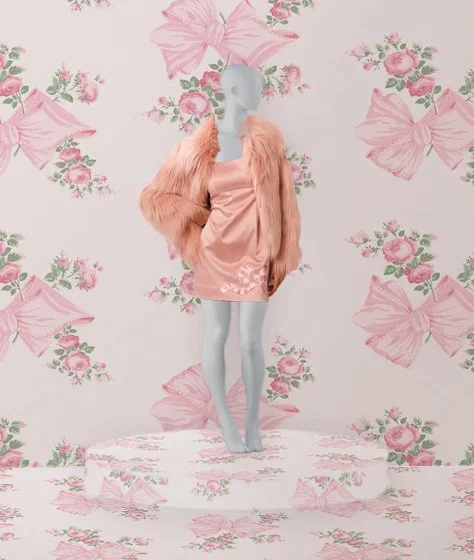
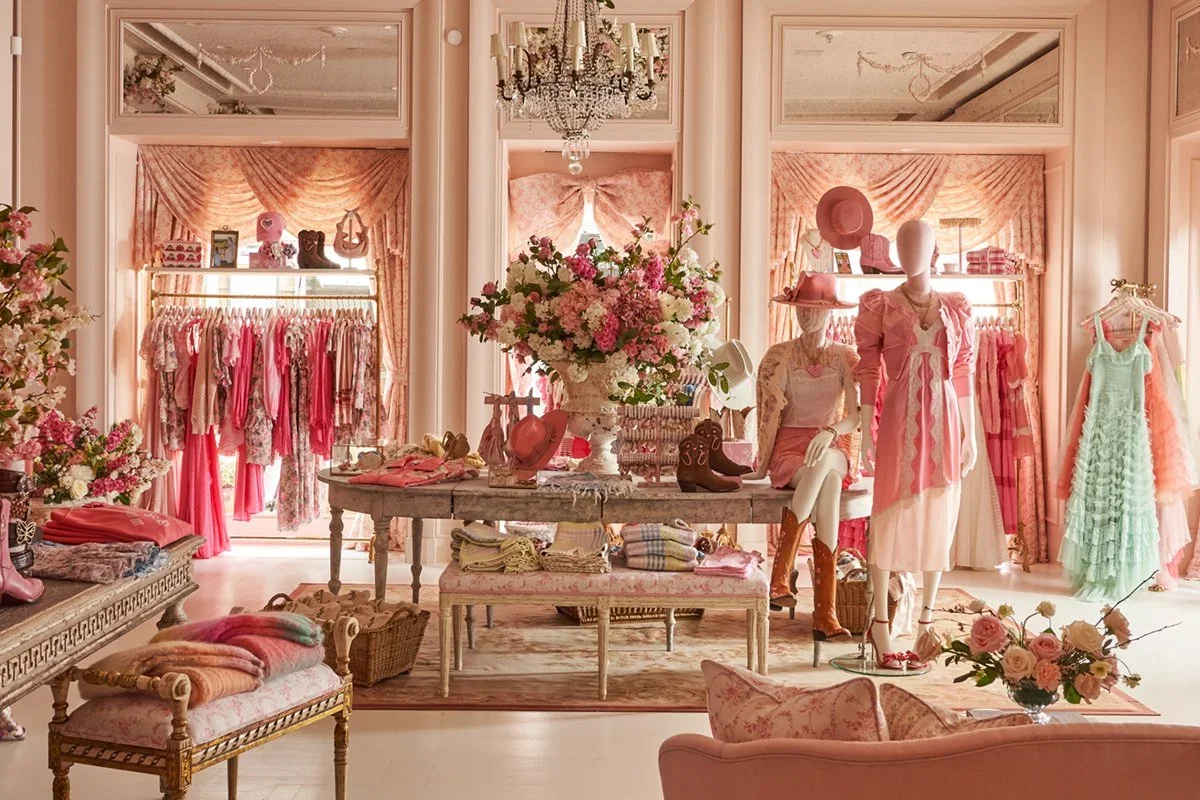
I used Photoshop to create a mannequin display set within a LoveShackFancy-inspired environment, incorporating wallpaper and styling that reflects the feel of their physical stores.
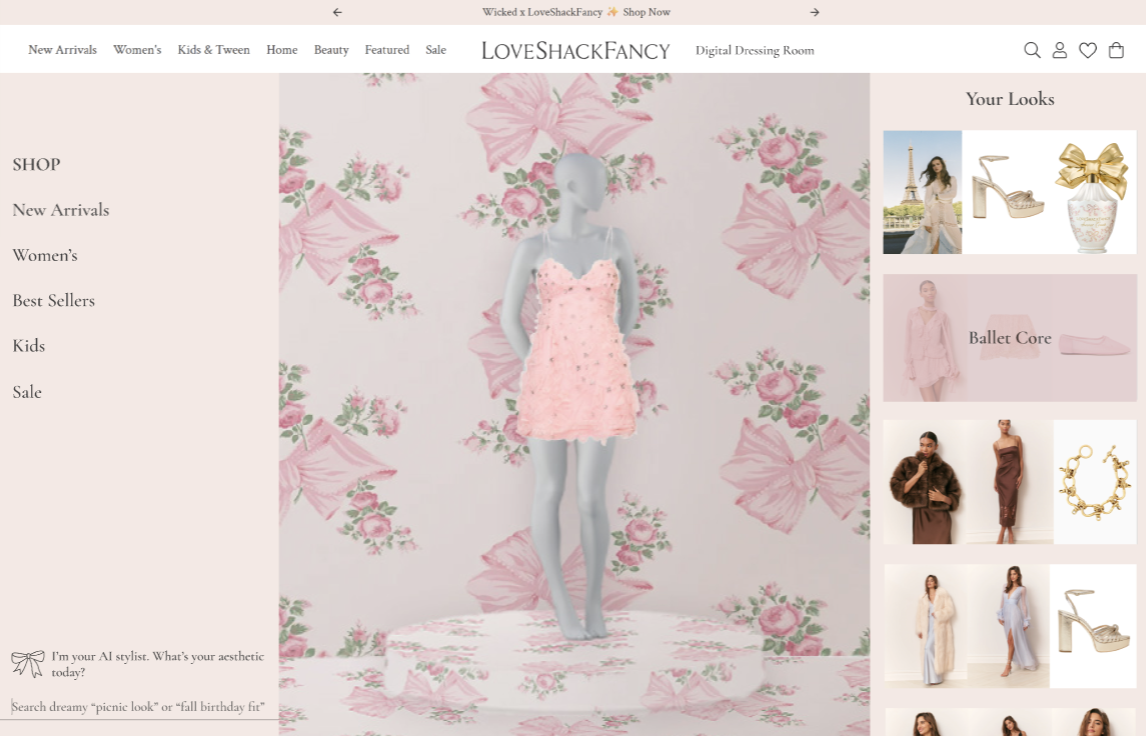
I then translated the wireframes into high-fidelity screens, applying:
the brand’s soft color palette and product imagery
real items from their website to ground the concept in reality
an AI interaction layer with prompts designed to feel playful and approachable for both younger users and adults
This process allowed me to move quickly while still building a concept that feels both imaginative and rooted in a real brand experience.
UI/UX Features
AI Styling Assistant
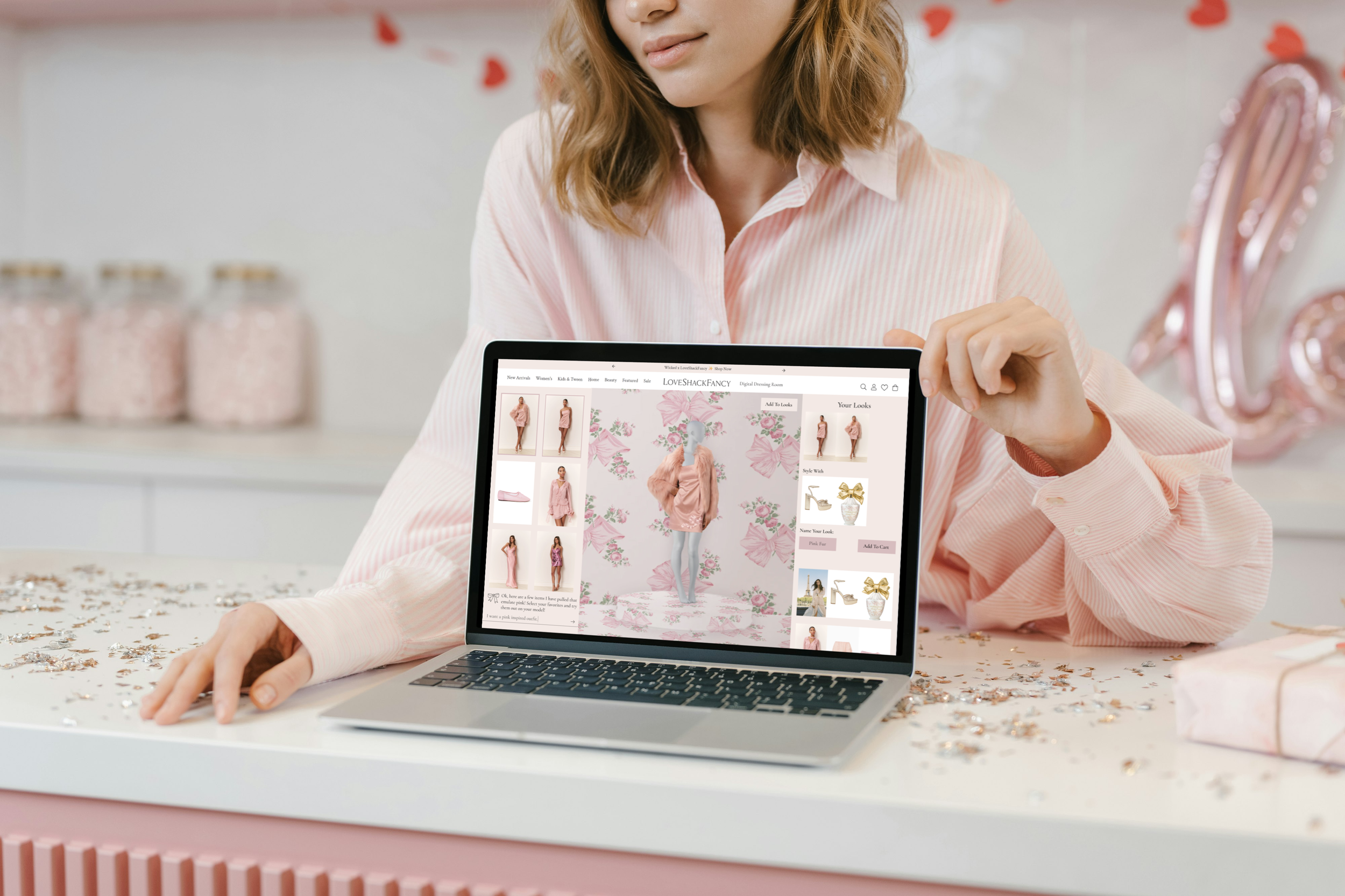
A built-in assistant, similar to ChatGPT, prompts users to describe a vibe, event, or specific look they’re going for.
“Brunch in the city,” “summer wedding guest,” “soft romantic everyday”
The AI then pulls curated outfit suggestions directly from the product catalog, helping users move from idea to outfit without endless scrolling.
Real-Time Outfit Visualization
Users can browse items through a left-side panel with familiar shopping categories.
When an item is selected, it instantly appears on a central mannequin
Allows users to build outfits piece by piece in real time
Creates a more immersive and interactive try-on experience
Look Building & Styling Layer
Instead of shopping item by item, users are encouraged to style complete outfits.
Add layers like jackets, shoes, and accessories
Mix and match pieces fluidly
Experiment without friction or commitment
Save & Name Your Looks
Users can save full outfits directly from the dressing room.
Saved looks include all selected items and styling combinations
Users can name and organize looks within their profile
Supports planning, revisiting, and identity expression
Shop the Full Look
To reduce friction and encourage higher-value purchases:
Users can purchase an entire outfit directly from the dressing room
Eliminates the need to add items individually
Bridges inspiration and checkout seamlessly
Reduced Scrolling, Increased Interaction
The experience shifts away from passive browsing toward active participation.
AI-guided suggestions replace overwhelming product grids
Users engage through styling, not just searching
Shopping becomes faster, more intentional, and more enjoyable
Tools
Figma and Photoshop